National Broadband Plan: The wheels are falling off…and so they should!

National Broadband Plan: The wheels are falling off…and so they should!

A few years ago, the Irish Government decided that every single house in Ireland should get a minimum of 30 Mbit/s of broadband connection. It is a totally crazy idea (and I will explain why) and it didn’t go too smooth yet with delay after delay. A shortlist of companies that wanted to submit a bid to deliver that National Broadband Plan (NBP) was created already in 2016, but not too much happened. This year now the tender document was meant to be issued so that the shortlisted companies can prepare their proposals.

Two companies (Imagine and Gigabit Ethernet) didn’t make it on the shortlist and from three shortlisted companies (Eir, Enet and Siro), Siro (an ESB and Vodafone cooperation) already last year pulled out, which only left Eir and Enet on the list. This week Eir also declared that they are not interested any further and that just leaves Enet. A tender process still has to happen, but with just one bidder, it is virtually certain that Enet will win (as long as they fulfill all criteria). And it also means that Enet will be able to charge nearly whatever they want and the government will have to pay it. But that means YOU and I are paying it!

So that NBP process is already broken and can’t be fixed anymore. Abandoning the whole plan and starting from fresh should be the ONLY option!

How did it come to that mess?

It all started with the nonsensical promise of 30 Mbit/s to every house in Dublin. That is a stupid promise for soooo many reasons. Firstly, it assumes that the broadband service is NEEDED for something. Decades earlier a Universal Service Obligation (USO) forced Telecom Eireann (now Eir) to provide a landline to every house in the country no matter what the cost would be. At the time Telecom Eireann was owned by the government and a landline was seen as a requirement for people who lived in the middle of nowhere to stay in touch and to be able to notify emergency services if something happened. The price was high! Tax payers paid thousands to reach remote houses and it was never the house owner that had to pay, but he/she paid the same as someone in the City Centre where phone lines would be just a few metres away.

The successor to landline services are now broadband services and people living in the middle of nowhere therefore expect that they should now get broadband services for NO extra price. But imagine this scenario: You decide (free choice!) to live in the remotest place in Co. Kerry and you came up with the genius idea that setting up a haulage/transport company for customers on the East Coast of Ireland is the perfect business for you. The streets are not great where you live, but because you decided that trucks need to get to you FAST, you now demand from the government that they will build a motorway to your company. Imagine! Everybody would say you are crazy to expect that and that you chose the wrong place for your company. No taxpayer would agree to pay for essentially a private motor way to you.

If it is a ridiculous idea to build a HUGE road to the remotest place, why is it not a ridiculous idea to build broadband services to the remotest places? Sure if people want to pay the full price for it, they can have it. But to expect that all the other taxpayers will pay for their choice to live far away from infrastructure doesn’t seem to make sense. Right?

Now, we are not unreasonable people, so let’s give them SOME Internet connection. They should also be allowed to order their goods from Amazon of Bookdepository if they want, sending and receiving e-mails is also ok and checking the news on a website is perfectly fine too. But uploading or downloading huge files or Netflix streaming is really not a basic requirement to live!

It could be a requirement for a company, though. but that brings me back to the motorway example: If you need extraordinary infrastructure you either need to pay for it in full or need to go where the infrastructure can be provided in an economically feasible way.

Because you are MUCH nicer and more caring than I am, you probably are now wondering how many houses and businesses we are talking about. I am glad you asked! It is around 900,000 (!) connections that were originally in that National Broadband Plan. That’s a lot of subsidised connections!!

But then something important happened: When all these delays happened, the mobile phone companies, Imagine and Eir grabbed the opportunity and as fast as lightning (they are usually MUCH slower) they built infrastructure to the easy reachable customers. So now more than 300,000 easy reachable customers are already with services and with the low hanging fruit gone, the remaining 500k-600k connections are the ones that nobody really wants because you can’t build a business on that basis.

And suddenly Eir’s withdrawal from the shortlist makes sooo much sense. They don’t want the scraps, the left-overs, the bottom of the barrel. In addition Eir knows, that if Enet wins the contract, Enet will HAVE to use Eir infrastructure to reach these 500,000, so Eir wins ANYWAY. Smart, right!?

So why does the government not stop that silly National Broadband Plan? Because the 500k connections could be around 1mio voters! In addition they seem to think that Ireland depends on the small businesses in the middle of nowhere to remain competitive in the European/international market.

And what would make sense? It would be necessary to draw lines! That means that not EVERYONE will get broadband, but if you live to far away from a city or at least town, then you are on your own! Then the promised/guaranteed bandwidth should be reduced to what is needed, not what would be nice to have. (Nobody NEEDS 30 Mbit/s!) And finally, the National Broadband Plan should be re-started because one really important way to reach any remote locations is via mobile phone data services, so mobile phone service providers HAVE to get involved and the government has to entice them enough to get involved.

One more silly rule is gone: Alcohol on Good Friday

One more silly rule is gone: Alcohol on Good Friday

On Thursday the Dail approved a change to the Intoxicating Liquor Act, that will remove the ban that stopped pubs, restaurants and off licenses from selling alcohol on Good Friday. It was an outdated law from 1927, from a time when Ireland was still VERY catholic, but it is a clear example where the Catholic Church still had a bigger impact on the state than it should have. This is the one and only reason why – in my opinion – this law change is a good change.

We don’t need a nanny state that tells us what to do based on church rules! No, I am NOT suggesting that now you should have alcohol on Good Friday! You should drink or not drink based on YOUR preferences, not based on a state or church rule (but if you prefer not to drink because of a church rule that is important to you, that is also 100% fine!).

Yes, too much alcohol is consumed in the Irish society, but a ban on Good Friday will not solve that problem and picking on that one day doesn’t make sense. I am totally in favour of strategies that reduce the consummation of alcohol through education, but not through a nonsensical Good Friday ban.

There is now only one other day left when the selling of alcohol is forbidden and that is Christmas Day. Some think if the selling of alcohol was allowed on that day, then suddenly pubs and restaurants wouldn’t give their staff a day off anymore. But if that is the driver. then we should have a law that regulates if pubs, restaurants and off-licenses are allowed to open or not, not a regulation “through the backdoor” via an alcohol selling ban.

I will continue to stay away from alcohol on Good Friday (not for religious reasons, but just because I don’t drink much anyway), but I am 100% in favour of a lifting of the ban. Is it this time me who is odd!?!?! :-)

Supermacs announce six new outlets – A foreigner asks WHY? ;-)

Supermacs announce six new outlets – A foreigner asks WHY? ;-)

As you know, I didn’t grow up in Ireland and never lived in the countryside, maybe that is the reason why I don’t get Supermacs?

They announced the creation of 400 jobs (Great!) and the opening of six (!) more outlets, which will bring the number of outlets in Ireland to a whopping 114! That is a great achievement, but I just don’t get how and why. Now I have to admit that I only once ate in Supermacs, so what is it that gets people excited about them?

To me, they seem like an odd mush-up of McDonalds, KFC, Subway and your local (Italian) chipper and I then wonder if it is a “Jack of all trades and master of none” scenario or if their food is better than the one from the mentioned competitors.Why would you go to Supermacs and not go to the others?

Three (!!) stores will open in Cork, and the others are in Balbriggan Co Dublin, Donegal town and Naas, Co Kildare. So maybe only country (especially from Cork) people get it? ;-)

The Tide has turned: Eighth Amendment!

The Tide has turned: Eighth Amendment!

The Eighth Amendment to the Irish Constitution from 1983 puts the right to life of the unborn on an equal standing with the mother’s right to life and is a hard fought over legal clause. The opponents are mainly the “Pro Choice” campaigners and the group that fights for the keeping of this clause are on the Anti-Abortion side. Interestingly though, that clause doesn’t mention abortion at all and its removal would not automatically mean that abortion is legalised, but as long as it is in the constitution it indirectly makes abortion illegal.

For that reason – and this is the only point the two groups agree on – the Anti-Abortion campaigners are convinced that a change of the Eighth Amendment will open the doors for abortion, something they are determined to fight as hard as possible. The Pro-Choice side also is of the opinion that the change (or removal) of the Eighth Amendment will legalise abortion.

In April 2017, the Citizen Assembly, a group of 99 Irish citizens who had the job to decide about what to do with this clause in the constitution because the political parties were too cowardly to make a decision, voted that the clause should be replaced or amended, but not removed. They further decided that abortion should be regulated in the normal body of law and NOT in the constitution. This was a very sensible approach many think. It is not at all an automatic legalisation of abortion, but removes a clause from the constitution that shouldn’t have never been put in there, because constitutions should be a lot more on a foundation level and not get into details.

The public opinion is very much divided about abortion in general and the two sides are so deeply opposed that no compromise will ever be possible.

A referendum will have to decide what happens with the Eighth Amendment and that referendum will happen in the summer as it seems. Most importantly it will NOT be a referendum about abortion, but only about the future of that clause in the constitution.

Until now it was very unclear what the outcome of the referendum might be. Opinion polls seem to indicate a majority for a form of repeal of the clause, but opinion polls can be very unreliable and since the main politicians hadn’t declared their opinion about it, there were still a LOT of question marks over the decision of their party followers.

It seems however that the tide has turned now! Michael Martin, the leader of Fianna Fail, has changed his opinion and is now in favour of removing the clause and Leo Varadkar, the leader of Fine Gael and Taoiseach, has indicated that he also supports the removal of the clause. The opinion of the two party leaders doesn’t mean that the referendum is now more or less decided. The opinions in the public don’t usually swing with the political leaders and they both have made clear that they will not tell their parliamentarians how to decide, but will allow a free vote. On the other hand, though, the clear declaration by both in favour of removing the clause from the constitution is a significant event in the process.

It should be noted for people that are not fully aware of the “Irish solution” to the abortion problem, that the clause never stopped abortion! Instead, women who felt that an an abortion was their only option, travelled to the UK for it. So it was a totally ineffective clause in the constitution!

Please note that the above description focuses on the Eighth Amendment and does NOT discuss the pros and cons of abortion AT ALL, I am also intentionally not taking any sides on abortion it is a MUCH to complex issue for this publication and this section. But I realised in the last six months through questions that people who only came to Ireland in recent years asked me, that the confusion about the Eighth Referendum is HUGE and since it has always been an oddity to me that the constitution covers this one singled out topic while while other very relevant aspect are not considered there, I decided to write about it.

If you asked me, I would be happy to state that it is my opinion that the Eighth Amendment should be removed because I think the laws of a country should deal with all legal issues and abortion belongs in this category.

You disagree? I 100% respect your opinion and I hope you respect mine. The good news for you – if you disagree – is, that I won’t be allowed to vote in the referendum. So don’t worry about me or my opinion. :-)

You can send me your opinion if you feel like it, but don’t expect an answer from me. I am not interested in discussing the pros or cons of abortion!

The bubble is back! Crazy apartment prices in Dublin!

The bubble is back! Crazy apartment prices in Dublin!

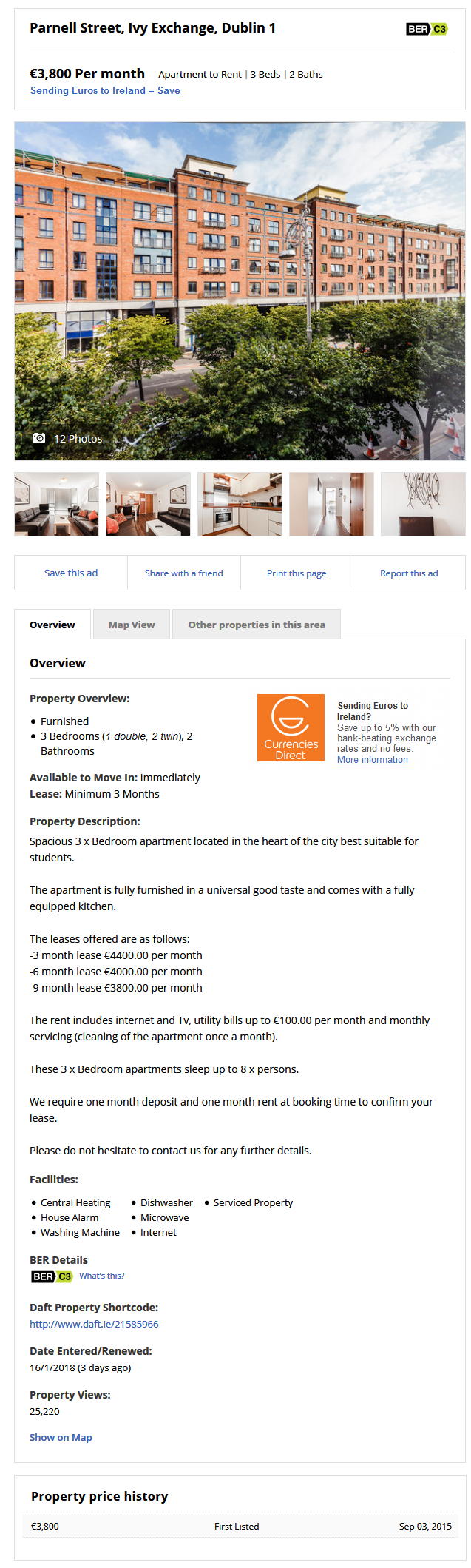
This week an apartment advertisement on Daft was shared on Facebook. The ad confirms that the craziness regarding Dublin rents is back. Exactly 10 years after the crash, we are were we were before.

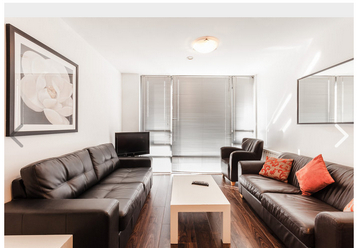
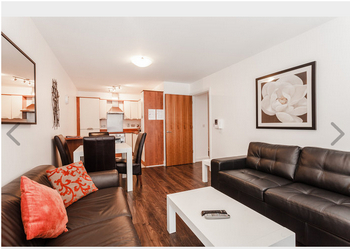
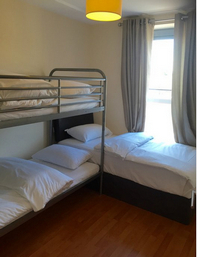
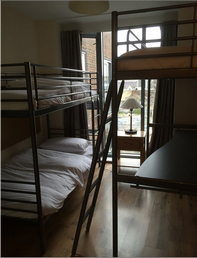
The apartment is a 3-bedroom apartment on Parnell Street and the rental price is a whopping EUR 3,800 per month. With such a mad price, it is not surprising that it is advertised to accommodate up to 8 people and the pictures show bunk beds in the two small bedrooms. But I would expect that the people who rent it will try to squeeze at least 10 people into it. :-O

Ad is shown below here and I have also added some of the interior pictures. It looks like a really nice apartment, but the “behind the curtain” view is on the last two pictures.


Malcare WordPress Security